New Archival Collections
New Archival Collections at the Leo Baeck Institute
The Leo Baeck Institute is continually collecting new archival materials related to the history of German-speaking Jews. Please see in the following a list of recently digitized archival collections, each with a short synopsis. Clicking on the link underneath the title will lead to the collection’s finding aid, which in turn contains links to its digital objects.
Rachel Wischnitzer collection addendum
Finding aid with links to digital objects
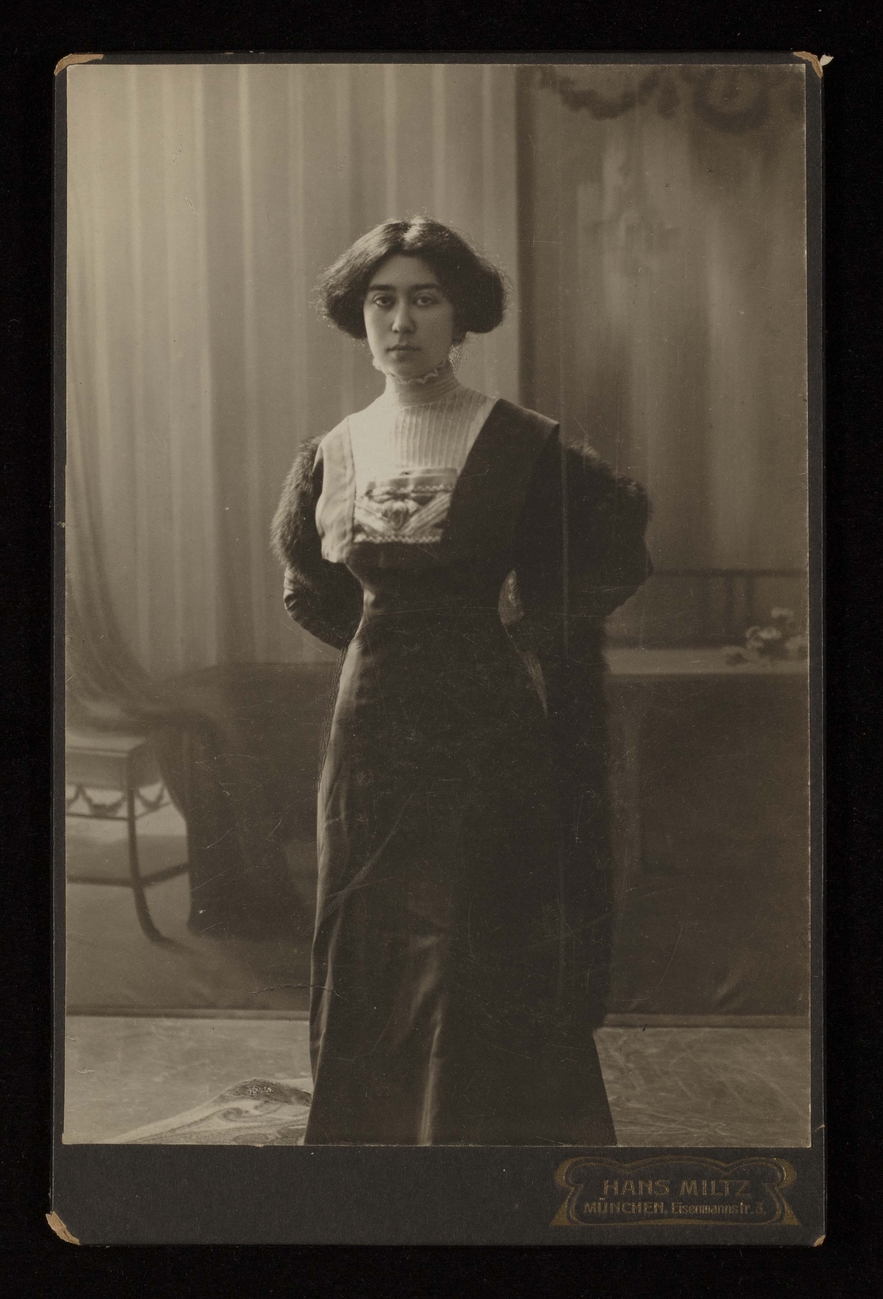
This collection contains professional and personal material of Rachel Wischnitzer and her husband Mark Wischnitzer. Unique to this collection is personal correspondence between the Wischnitzers and their son Leonard J. Wischnitzer (later Winchester).
Rachel Wischnitzer née Bernstein was born in Minsk, Russia, on April 15, 1885. In the years after her graduation from the Gymnasium in Warsaw, she studied art and architecture in Brussels and Paris, where she received her diploma. After university, she returned to Russia as part of the Evreiskaia Entsiklopediia (Russian-language Jewish Encyclopedia) staff. Mark Wischnitzer (also Markus Wischnitzer and Mordko Wisznicer) was born in Rovno, Russia, on May 10, 1882. He attended the K. K. Kronprinz-Rudolf Gymnasium in Brody from 1894 until 1901, then continued his studies at the University of Vienna and Friedrich-Wilhelms-Universität in Berlin, from which he received his doctorate in 1906. On June 5, 1912, Rachel Bernstein married Mark Wischnitzer, who served as one of the editors of the Russian Jewish Encyclopedia.
The Wischnitzers' only child, Leonard James Wischnitzer, was born in Berlin on January 5, 1924. The family immigrated to Paris in 1938. Rachel Wischnitzer earned a master’s degree from New York University’s Institute of Fine Arts in 1944. She taught fine arts at Yeshiva University’s Stern College for Women from 1956 until her retirement in 1968. Mark Wischnitzer died October 15, 1955, in Tel Aviv, Israel. Rachel Wischnitzer died November 20, 1989, in New York.
Writings by Elisabeth Model
Finding aid with links to digital objects
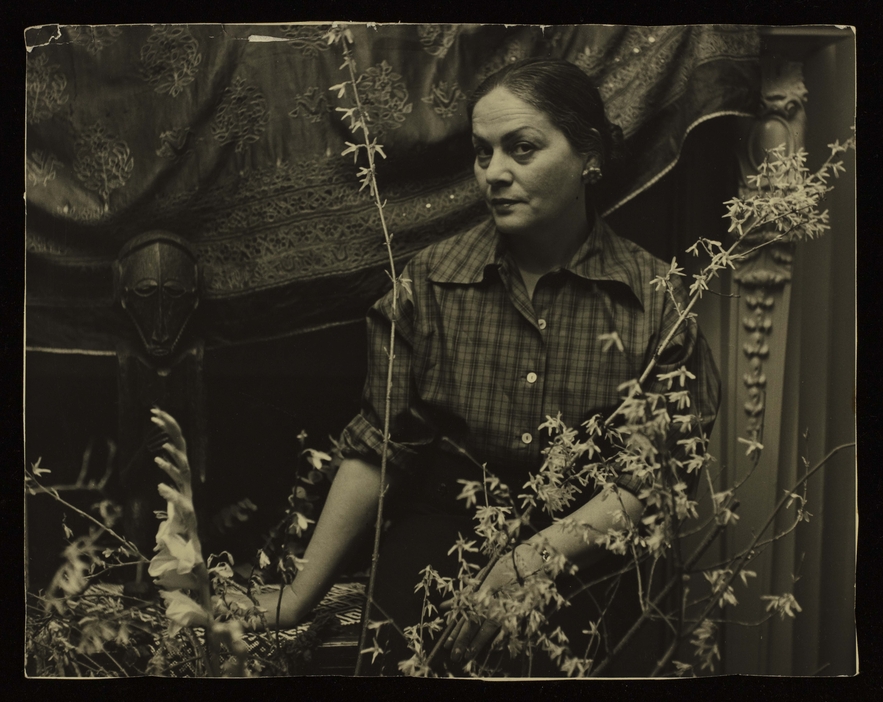
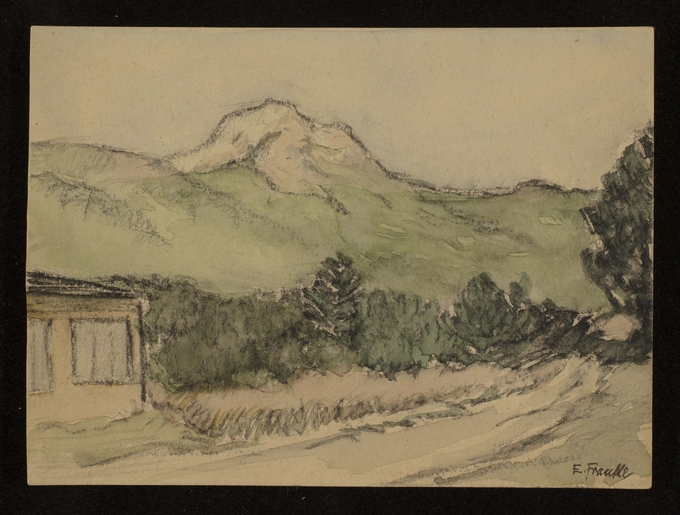
The collection holds two autobiographical writings by the artist Elisabeth Model. One work describes her husband’s persecution by the Nazis in Amsterdam, along with the family’s later escape to and life in the United States. The second work focuses on places and people that impressed her throughout her life.
Elisabeth (Lise) Model was born in Bayreuth into a family of artists in 1897. She studied sculpture in Munich under Professor Thor; in Paris under Moissi Kogan, and at the Rijksakademie in Amsterdam under Professor Jurgens. She became a painter and a sculptor in her own right. While studying in Munich, she met her future husband Max Model, born February 3, 1895. Max was a banker for the Dresdner bank in Frankfurt and Mannheim. Elisabeth and Max Model got married on September 5, 1922 and moved to Amsterdam, where they became Dutch citizens. They had two sons, Wolfgang (Wolfe) and Franz. Elisabeth, their two sons, and her sister Mali arrived in New York on June 21, 1941. Max Model died September 11, 1950. Elisabeth Model died in New York City on November 12, 1993.
Erich and Eva Holzer Collection
Finding aid with links to digital objects
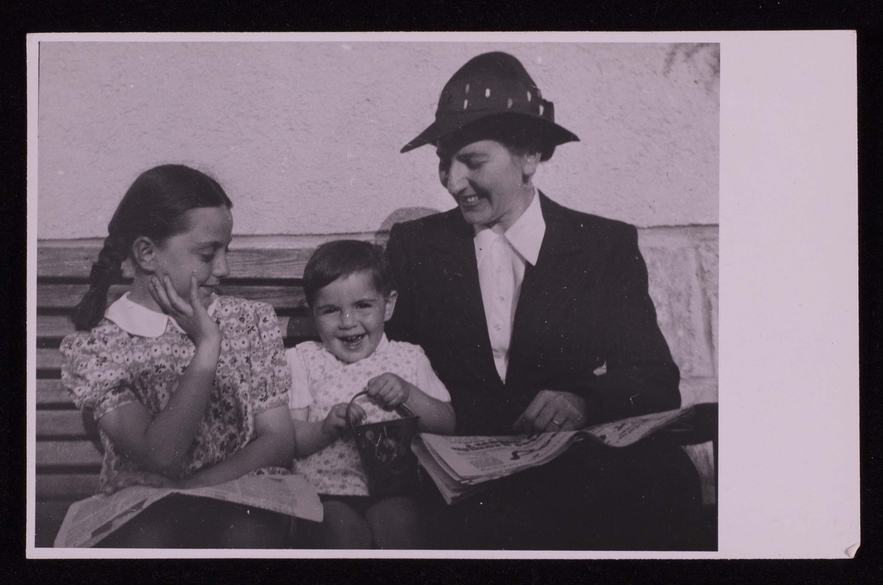
This collection contains correspondence, personal papers, and photographs pertaining to Erich and Eva Holzer. Also included are documents regarding their early education, as well as emigration to the United States and their travels between Colombia, Ecuador and the United States.
Erich Paul Holzer was born in Hamburg, Germany on December 5, 1923, to Bernhard and Hedwig Holzer; as Bernhard was Austrian, Erich obtained Austrian citizenship at birth. Erich went to a public school in Hamburg. In 1933, his parents decided to move him and his sister to Jewish schools: Erich went to Talmud Tora, and his sister Lieselotte to Israelitische Töchterschule. In 1938, the family departed for Cali, Colombia, where Erich started studying agricultural engineering in 1941 and later worked as a farmer.
Eva was born in Komárno (Slovakia) on June 10, 1929. In 1940, Eva lived in Quito, Ecuador, where she went to the Colegio Americano (American School). In 1947, she came to Cali, Colombia. Erich got married to Eva Rauchwerger in 1948 in Cali. Erich and Eva had a son, Ricardo Hermann Holzer, and a daughter, Vivian Holzer. The family emigrated to the United States in ca. 1953 and later lived in New Jersey, where Erich died in 1998.
Wimpfheimer Family Collection
Finding aid with links to digital objects
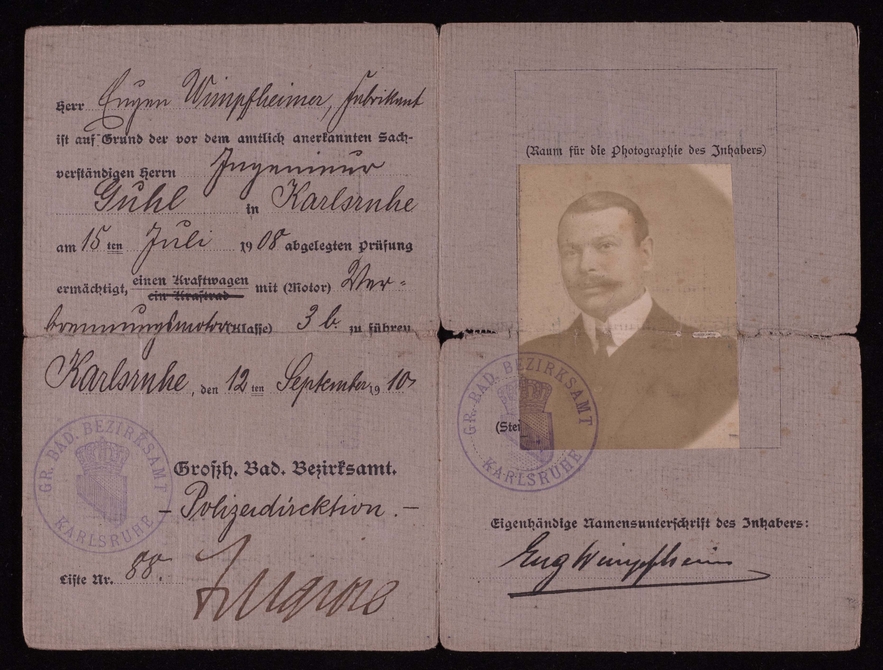
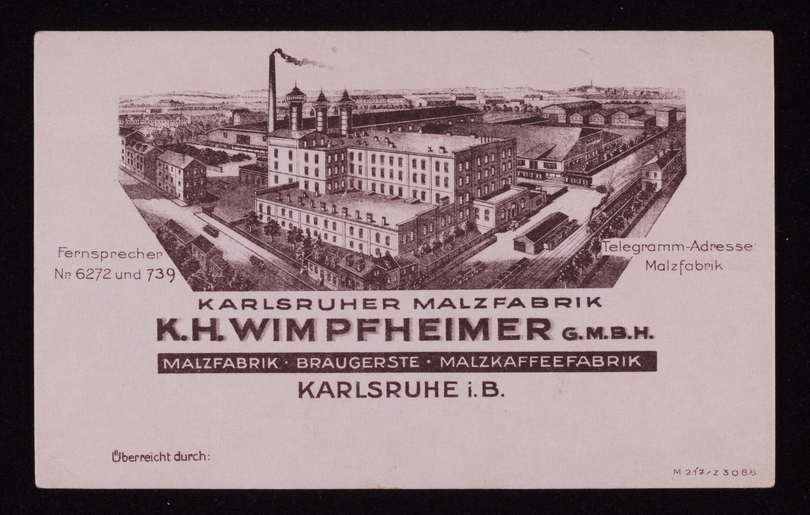
The collection holds the documents and correspondence of the Wimpfheimer family from Karlsruhe. The collection covers the Wimpfheimers’ emigration to Switzerland and later the United States as well as their efforts to regain restitution for the family’s malting factory in Karlsruhe.
Eugen Wimpfheimer was born in Karlsruhe in 1875. His parents, Karl and Fanny Wimpfheimer (née Offenheimer), owned Karlsruhe’s largest malting factory. The Wimpfheimer malting factory supplied malt to the German army during World War I. Eugen Wimpfheimer was married to Clémence Wimpfheimer (née Guggenheim), who was born in the Swiss Kanton Aargau in 1882. Their first daughter Maria (Mia) was born in Heidelberg in 1914.
Maria (Mia) Fanny Wimpfheimer studied French culture in Paris before studying horticulture in England. She later graduated from Columbia University in New York in international administration. Maria emigrated to Israel where she married Micha Pietrkowski. Maria’s brother Karl Friedrich Wimpfheimer was born in Heidelberg in 1920, followed by their youngest sister Alice Adelheid Wimpfheimer in 1924. By then, the Wimpfheimer family had returned to Karlsruhe. In 1937, Eugen Wimpfheimer had to sell his company. The family had left for Switzerland in early 1937. After successfully emigrating to the United States in 1941 and living in New York, Eugen Wimpfheimer died in 1946 while vacationing in Switzerland.
The Wimpfheimer malting factory was returned to the Wimpfheimer family by 1949. Karl Wimpfheimer became its new head until the factory closed in 1982.
Lederer Family Collection
Finding aid with links to digital objects
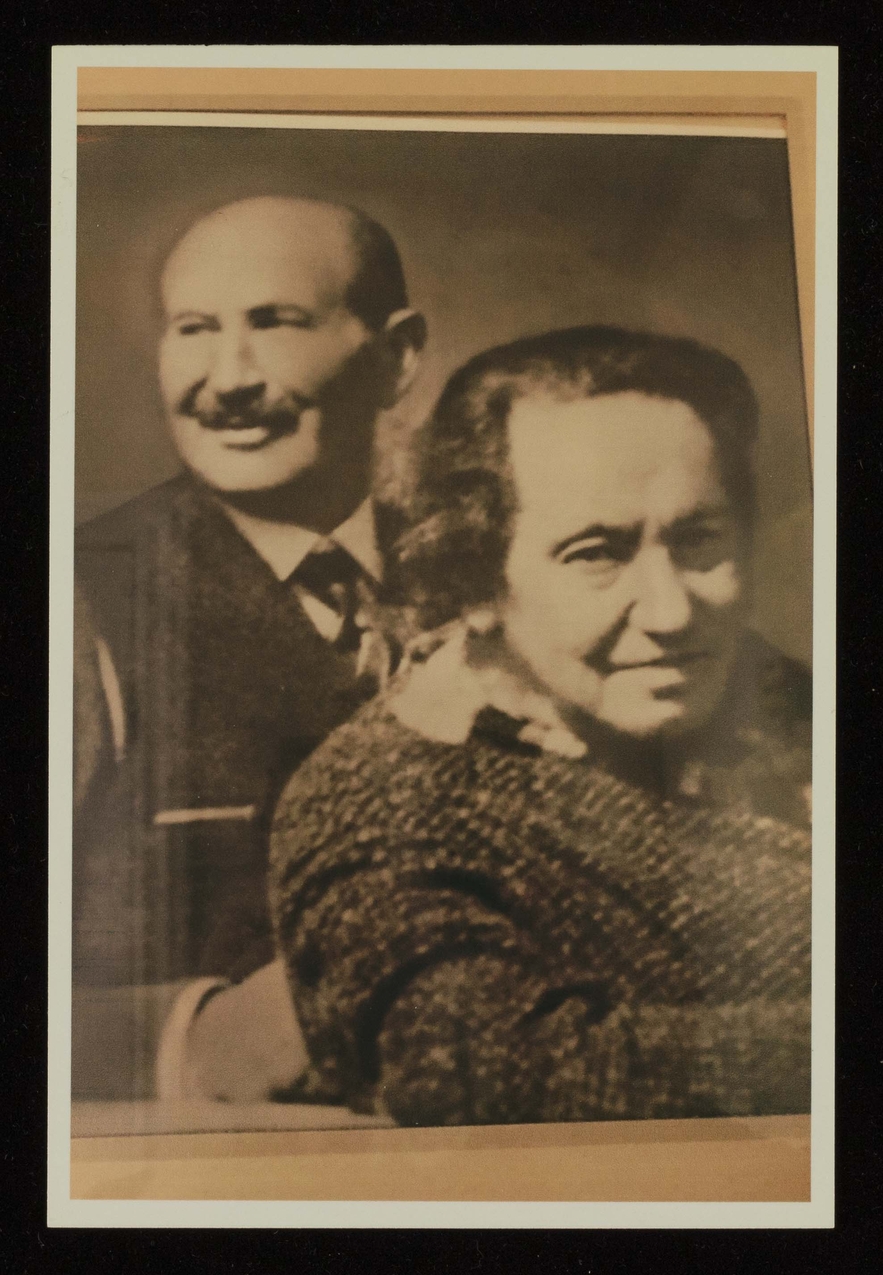
The collection holds the correspondence of Emil Lederer to his family and friends in Czechoslovakia. Emil had emigrated to Canada and tried to establish his own farm. The collection also holds manuscripts for a book and several plays written by Emil’s mother Paula Lederer, who published under the name Paul Lederer.
Paula Lederer was originally from Czechoslovakia and married to Otto Lederer. The Lederer family, including their son Emil Lederer with his wife and children, had emigrated to Canada in 1938. Paula was the author of a book and multiple plays, mostly published under the male name Paul Lederer. After their emigration to Canada, the Lederers settled in Nova Scotia and later Ontario.
Inge Worth Estate Collection
Finding aid with links to digital objects
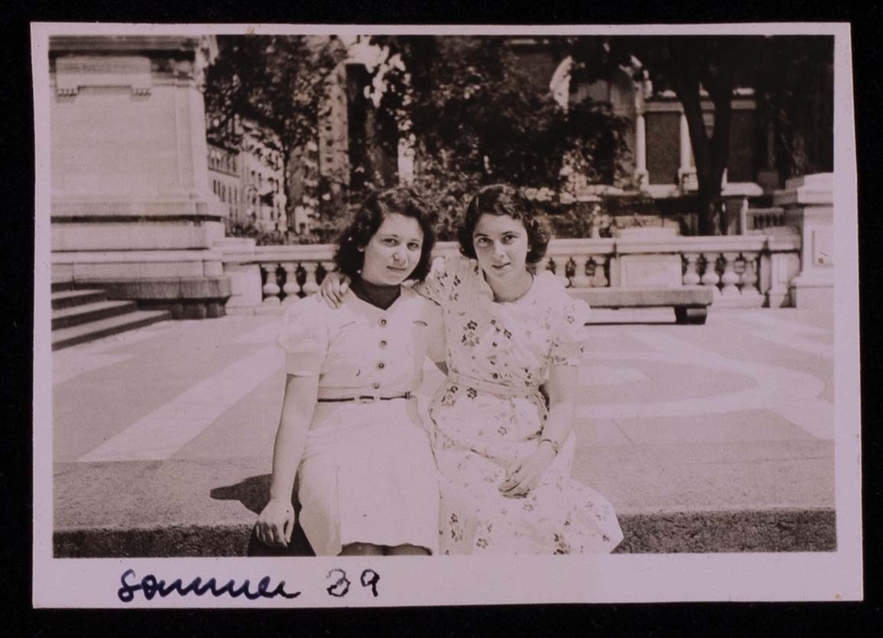
This collection documents the life of Inge (née Josephsohn) Worth (1922-2016), who immigrated to the U.S. in 1938. Correspondence, personal writings, photographs, and other archival materials describe Inge’s early years in Germany, and her experiences as a refugee; as well as her marriages to Manfred Keiler and Peter Worth; and her involvement with cultural activities in Lincoln, Nebraska.
Inge (née Josephsohn) Worth was born in Danzig. They emigrated to New York City in 1938. Upon arrival, her father changed the family name from Josephsohn to Joston. Inge graduated from Rhodes Preparatory School before enrolling at Hunter College. In 1947, Inge married Manfred Keiler, also a German-Jewish refugee living in New York, and together they moved to Lincoln, Nebraska, where Manfred taught art and where Inge worked as an administrator. In 1965, five years after Manfred’s death, Inge married Peter Worth, an art historian at the University of Nebraska—Lincoln. Peter died in 2010 and Inge Worth died in 2016 in Lincoln, Nebraska.
Frankl-Kulbach family collection
Finding aid with links to digital objects
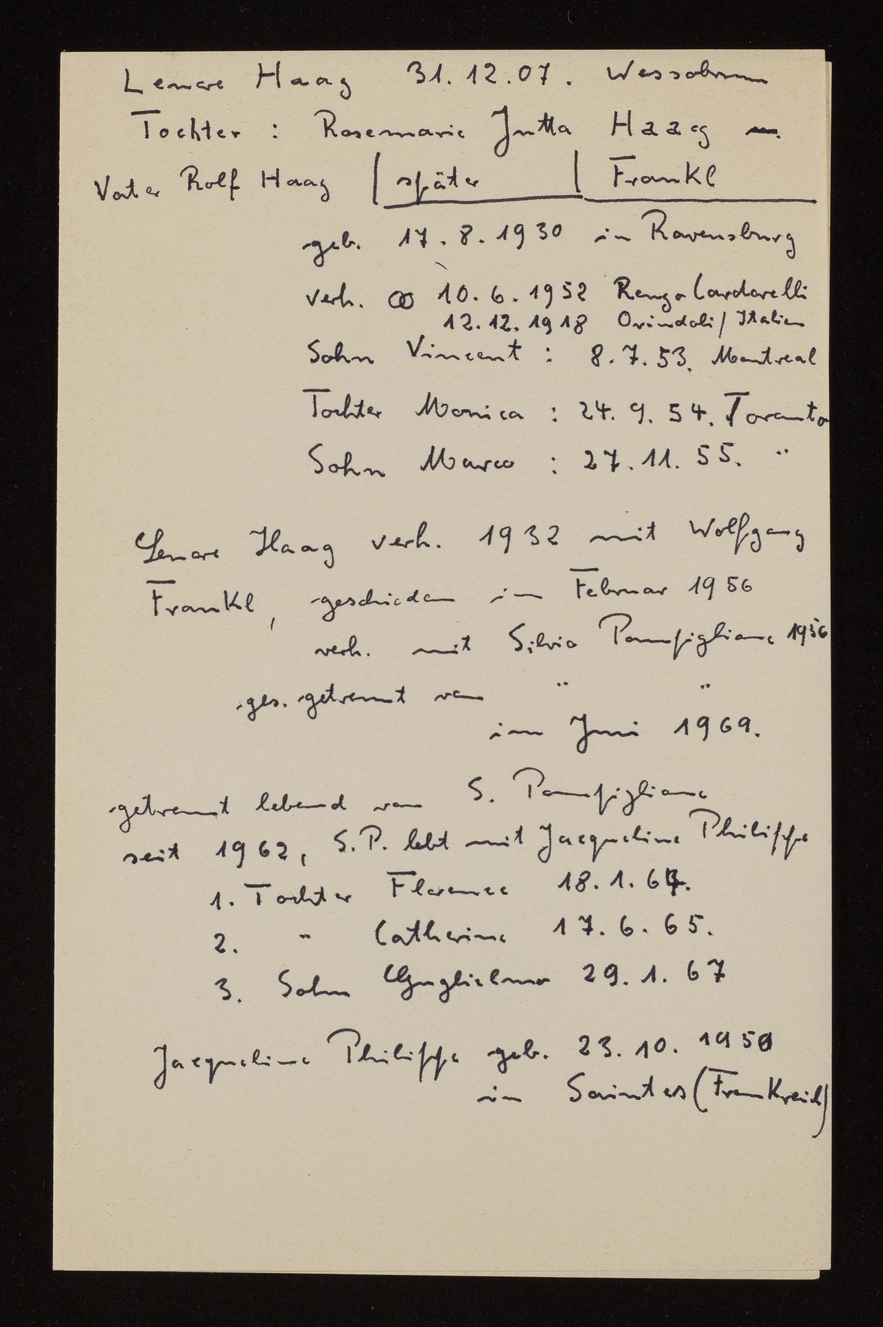
The Frankl-Kulbach family collection contains materials documenting the lives of members of the Frankl, Kulbach, and related families, particularly art historian Paul Frankl and his wife Elsa Frankl, and their daughters Johanna Kulbach née Frankl, Susan Wilk née Frankl, and Regula Davis née Frankl. Through family histories, correspondence, diaries, vital documents, writings, and photographs, the collection covers their lives in Germany before World War II, their efforts to immigrate to the United States, and their lives and careers in the United States.
Jean Herta and Jacques Werner Bloch Collection
Finding aid with links to digital objects
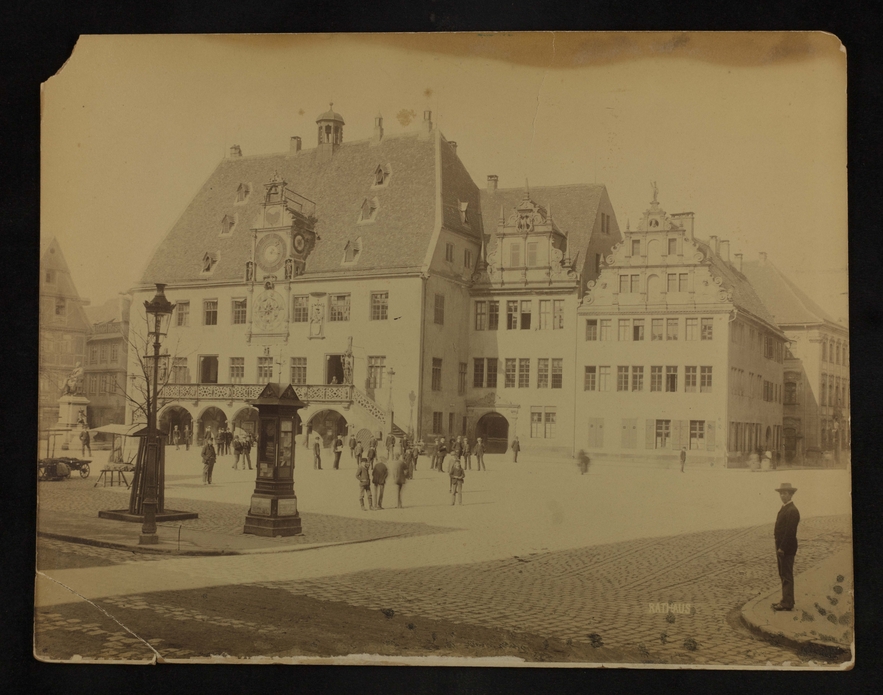
This collection documents the lives of Jean Herta (née Dreyfuss) and Jacques Werner Bloch, with a focus on their early lives. In addition, it holds papers of their parents and extended family as well as genealogical research.
Jacques Werner Bloch was born as Werner Jakob Bloch in Baden-Baden, Germany, on June 19, 1920. He grew up in the village of Rheinbischofsheim. From 1933 to 1935 he studied to become a chef in Montbeliard, France. His family left Germany to join him there. In September 1939, he was interned. In January 1940, he joined the French army as a cook. Soon after, in June 1940, following the occupation of Paris, he escaped to Vichy France disguised as a farmer. He was able to leave the country and arrived in New York City on June 13, 1941, later followed by the rest of his family.
In New York, Jacques Werner Bloch worked as a cook in New York hotels, including the Waldorf-Astoria. In February 1943 he was drafted into the United States Army and sent to Europe, deployed near the Battle of the Bulge. On December 19, 1944, the company surrendered, and soldiers were taken to a prisoner-of-war camp in Germany. Jacques Werner Bloch received two bronze medals later. After returning to New York, he met Jean Herta Dreyfuss. In 1949, he began working as the Food Director at John Hopkins Hospital in Baltimore, Maryland.
Jean Herta Dreyfuss was born on November 14, 1924, in Pforzheim Germany. Her father had been arrested on November 9, 1938, and sent to Dachau, where he was detained for six weeks until his wife Ida was able to secure his release. In 1939 the family emigrated to New York City, where Jean Herta Dreyfuss attended high school and took evening courses at Hunter College. She worked as a secretary during and after the war.
In 1949, Jacques Werner Bloch and Jean Herta Dreyfuss married. In 1954, they settled in New York City, where Jacques became Food Director, and later, head of the Nutrition Department, at Montefiore Hospital in the Bronx. They had two children, born in 1953 and in 1957.
Jacques Werner Bloch died on September 20, 2011. Jean Herta Dreyfuss passed away on August 29, 2017.
Freudenberg Family Collection
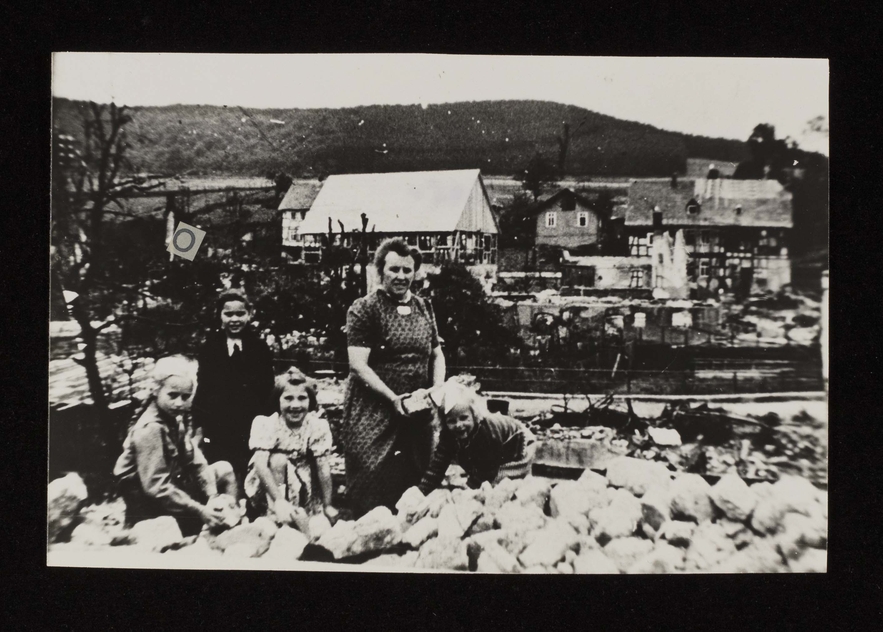
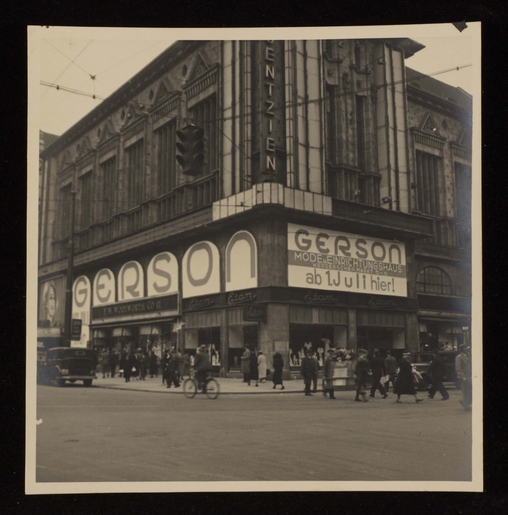
The Freudenberg family collection documents the lives of three generations of this family, as well as information on the Hermann Gerson department store owned by them. More than half the collection consists of family photographs..
The Freudenberg family was rooted in Bödefeld, Germany, where Philipp Freudenberg was born in 1833. Philipp left Bödefeld at fifteen and worked in Lippstadt, Bochum and Aachen, where he built the fashion house Löwenstein. In 1889, Philipp became a partner of fashion house (Modekaufhaus) Hermann Gerson & Co. in Berlin, becoming its sole owner in 1891. Under his leadership, it became one of the most prominent department stores in Germany, especially known for its fashions. Philipp Freudenberg married Johanna Löwenstein and they moved to the town of Elberfeld in the Rhineland. The couple had five sons: Albert, Hermann, Julius, Siegfried, and Eduard.
Hermann Freudenberg studied banking in Brussels, where he met and later married, Bertha Hirsch. They would have four children: Helene, Georg, Johanna, and Maria. Hermann Freudenberg acquired a large collection of art and was highly active in the development of the German fashion industry. His brother Julius Freudenberg assisted in the running of the Hermann Gerson department store, particularly in its administrative activities and financial aspects.
After Philipp’s death in 1919, his only surviving sons, Hermann and Julius Freudenberg, took over the leadership of the firm. They were joined by Hermann Freudenberg’s two sons-in-law and by his son Georg Freudenberg who was born in Berlin in 1897.
Georg Freudenberg received a doctorate in philosophy from the University of Berlin in 1919. In 1924, he married Hildegard (called Hilde) Grünfeld, whose family was also prominent in the textile trade. The couple would have three children.
During the 1930s, most members of the Freudenberg family escaped Nazi Germany, going to the Netherlands, Cuba, the United States, and Palestine. Georg’s sister Helene, her husband Hermann Mayer, and their children were deported to concentration camps where they died.
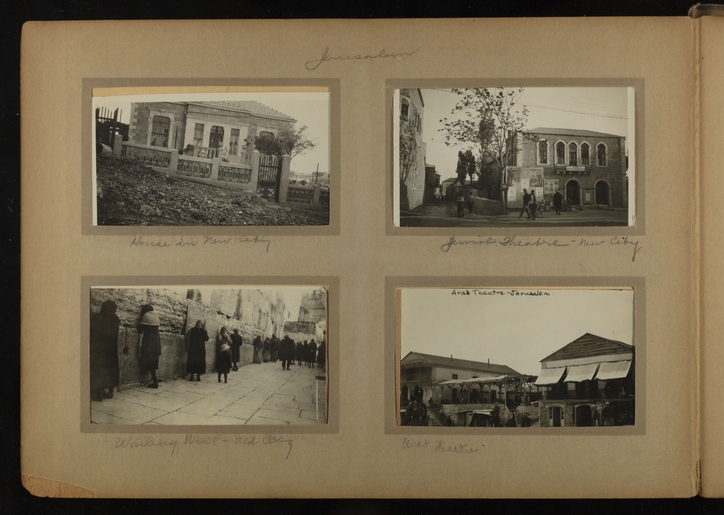
In 1935, Georg Freudenberg and his family members went to Palestine to join his younger sister Maria who had emigrated there two years earlier with her husband. Georg and his wife Hildegard then took the names Gideon and Hadassah Freudenberg. The family had a farm for fourteen years until Gideon went to Jerusalem, where he taught at the University of Jerusalem.
Gerhard Meyer-Sichting Collection
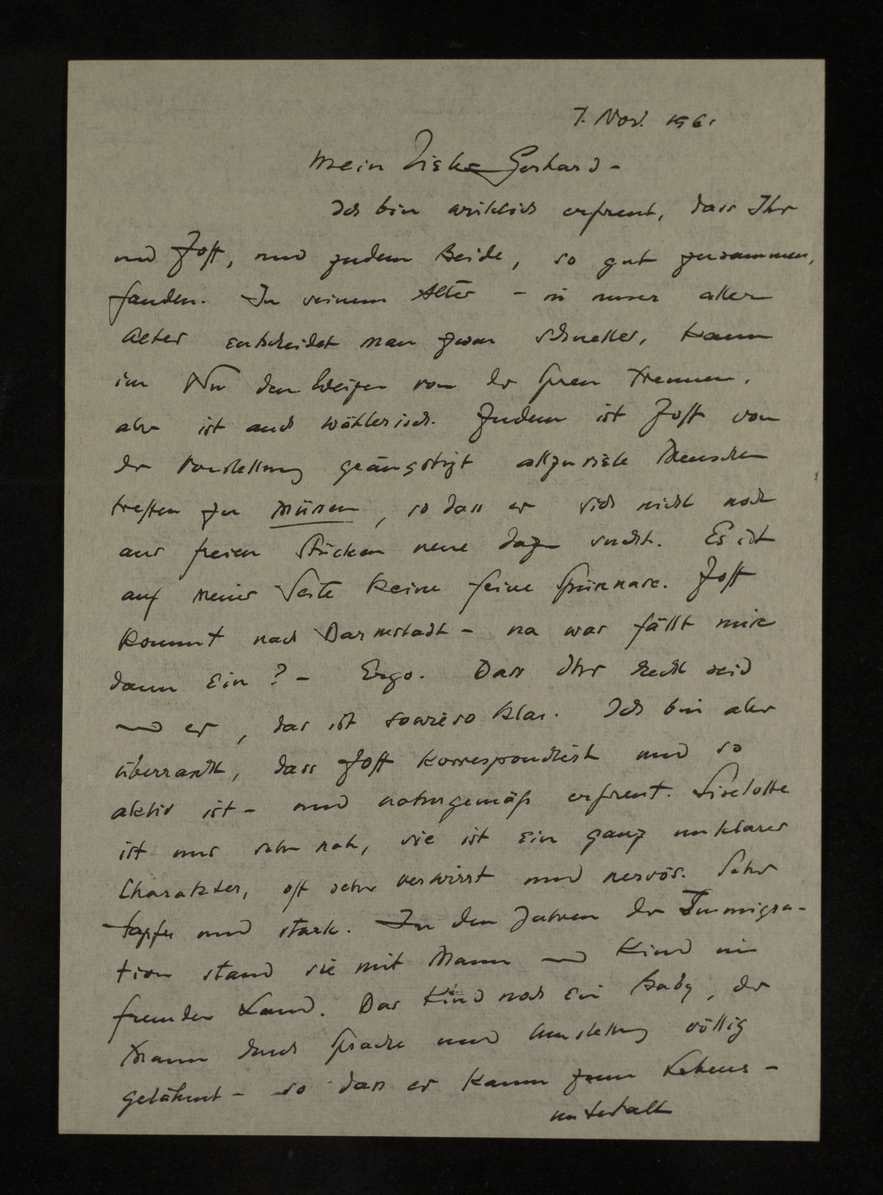
The collection contains the correspondence between the writer and artist Rafaello (Lello) Busoni and the violinist Gerhard Meyer-Sichting from 1955 until Busoni’s death in 1962. Also included are diary entries; drawings; poems; and photographs. The majority of the materials relate to the creative and scholarly work of the two artists, as well as their family lives and their personal thoughts or opinions about art exhibitions, theater, and visits to the opera.
The violinist, teacher, and author Gerhard Meyer-Sichting was born in Bremen in 1902. He performed at concerts in Germany and worked with various journals and newspapers. Gerhard Meyer-Sichting died 1980 in Germany.
The graphic artist Rafaello Busoni was born in Berlin in 1900, the son of the Italian musician and composer Ferruccio Busoni (1866-1924). Rafaello’s second wife, Hannah née Apfel was Jewish, and the couple escaped Nazi-Germany to Spain, Sweden, and eventually to the U.S. Rafaello Busoni died in New York in 1962.
Auguste and Emil Glauber Collection
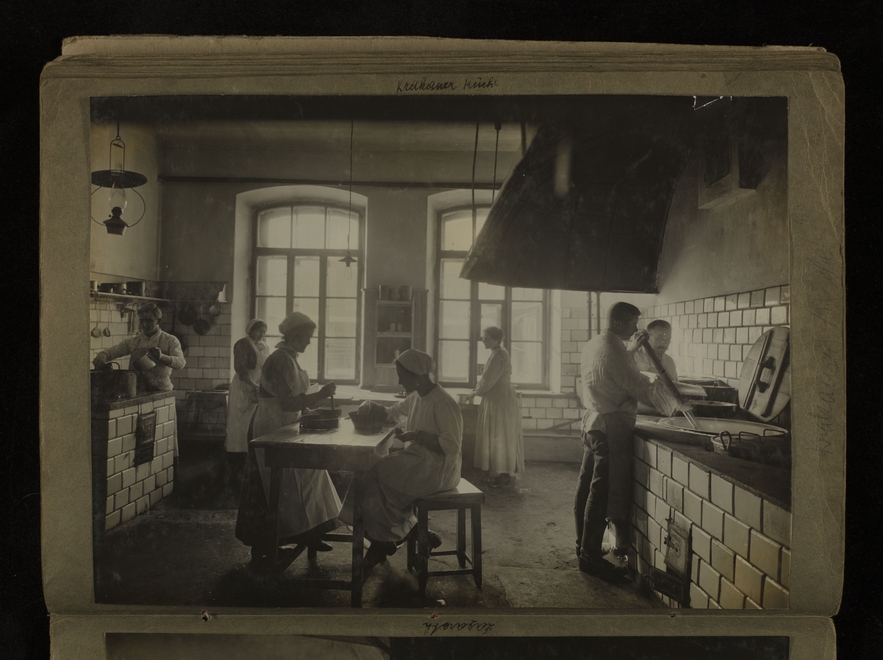
The collection documents the lives of Auguste Glauber, née Mayer and her husband Emil Glauber with references to family members in Austria, United States, China (Shanghai), and Czechoslovakia. Also included are documents pertaining to the family’s textile firm “Leopold Mayer & Sons”, as well as Gustl’s family photo album and a recipe book. Some documents are related to the family’s business led by Heinrich (Hans) Mayer, who later emigrated to Shanghai.
Auguste (Gusti or Gustl) Glauber née Mayer was born into a well-to-do family in Vienna in the early 1900’s. Her father Heinrich (Hans) Mayer had inherited the family’s textile firm “Leopold Mayer & Sons”. In 1928, she married Emil Glauber from Berlin, and the couple had two children, George and Eleonore (Lore). Emil worked at his father-in-law’s company and developed new techniques for dying and bleaching fabrics. In 1938, Auguste and the children emigrated via Belgium to the United States, followed soon after by Emil; they lived in Aurora Illinois. During the early 1940’s, Emil was looking for a job as a chemical engineer in the textile industry, and he sent recurring letters to his friend and fellow chemist, Dr. Paul Wengraf, who had emigrated to New York.
Auguste kept in touch with her remaining family overseas, especially her parents Heinrich and Erna Mayer, who had emigrated to Shanghai, and her aunt Paula in Pilsen and in Prague.
Olga Spitzer-Feitler was married to Maximilian Feitler. Their son Joe Feitler was married to Auguste and Emil’s daughter, Eleonore (Lore). Olga was born and raised in Vienna, where she lived until May/June of 1939, when she and her husband immigrated to the United States. Olga tried to keep in touch with her remaining family in Europe, especially with her aunt Emma.
Walter and Marie Schiller family Collection
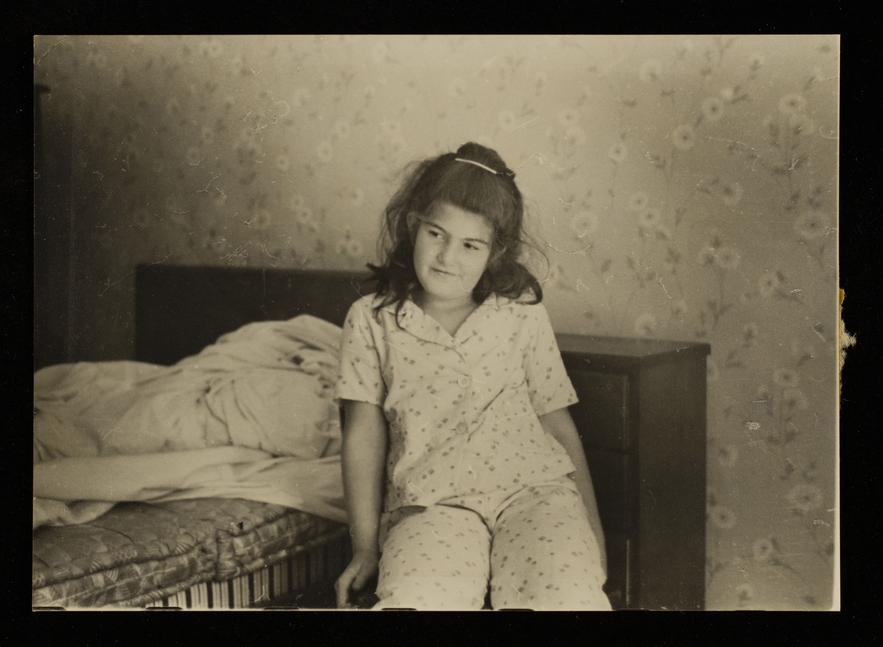
This collection chronicles the personal life and medical career of the gynecological oncologist Walter Schiller (1887-1960), born in Vienna, Austria; the collection also includes substantial materials about his wife, Marie Schiller née Popper (1893-1980) and their two daughters, Esther Schiller Porto (1929-2011) and Eva Susanne Schiller Udell (1934-2016). Also included are materials by and pertaining to Walter Schiller’s maternal uncle, the Viennese playwright Armin Friedmann (1863-1939).
Walter Schiller was born in Vienna, Austria on December 3, 1887, the only child of Emma Friedmann and Friedrich Schiller. After receiving his medical degree in 1912 from the University of Vienna, Walter worked as a pathologist for a medical laboratory in the Austro-Hungarian Army during World War I. From 1918 to 1921, Walter worked as a pathologist at the Second Military Hospital of Vienna and, from 1921 to 1936, he was Director of Laboratories at the Second Gynecological Clinic of the University of Vienna. After marrying trained linguist Marie Popper (1893-1980) in 1923, Walter and his wife had two daughters: Esther Marianne Schiller (later Esther Porto) and Eva Susanne Schiller (later Susanne Udell). Through the help of his wife, Walter toured the United States from 1936 to 1937 to present his research and to find a place to relocate in light of the Nazi threat. The family emigrated to New York City in 1937 and lived there for one year before moving to Evanston, Illinois; Walter then became Director of Pathology at Cook County Hospital in Chicago. Walter Schiller died in Evanston, Illinois on May 2, 1960, at age 73. Marie Schiller died in Shelburne, Vermont (where her daughter Susanne lived with her husband and two children) on September 28, 1980, at age 87.
Lori Beller Shearn Collection
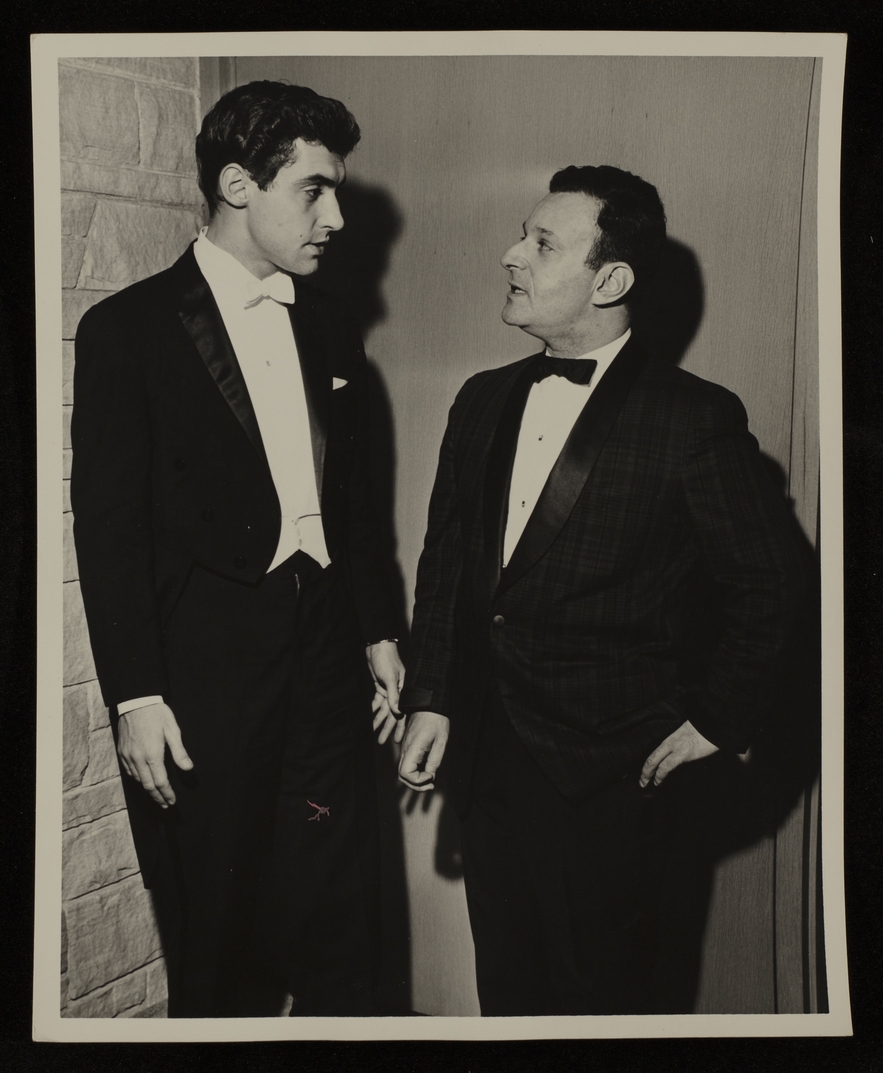
The collection contains materials pertaining to the life of Lori Beller Shearn, her husband, Dr. Martin A. Shearn, and other members of their extended family, including clippings, correspondence, official documents, photographs, autograph books, and a yearbook. Of note are personal narratives written by Lori about life in Vienna after Kristallnacht, her escape from Vienna to London, and her experiences in the United States.
Lori Beller was born June 27, 1925 in Vienna, Austria to Pinkas (later Paul) Beller and Irma née Fiedler. Irma (1897-1988) was born and raised in Vienna, while Paul (1891-1987) was an immigrant from Poland; they married in 1920 and their first child, Edward, was born in 1921. Paul owned a store in Vienna selling supplies for tailors where he and Irma both worked alongside a salesclerk, Rosa Vanek.
After the annexation of Austria by the Nazis, the family made plans for emigration. Edward, who had joined a Zionist organization, traveled to Rotterdam to work on a farm and train for work in Palestine. Irma and Paul tried to arrange passage to the United States; however, there was a quota in place at that time that only allowed a very small number of immigrants with origins in Poland, like Paul. Instead, Paul traveled to Shanghai, while Irma placed an ad in the Jewish Chronicle in the hope of finding a Jewish family in London to take in Lori. The Steinberg family replied to the ad, and Lori arrived in London to stay with them in January 1939. In the meantime, Irma arranged her own passage to the United States. The family was reunited in New York in November 1940.
Lori attended James Monroe High School in The Bronx and graduated in 1943 as class valedictorian. She went on to attend Hunter College, where she graduated with a Bachelor of Arts degree in 1951. On January 17, 1951, Lori married Dr. Martin A. Shearn in New York. A graduate of Ohio University and New York Medical College, Martin trained at Bellevue Hospital in New York before accepting a Cardiology Fellowship at Stanford University Medical Center. The Bellers moved to Northern California, where Martin became a noted rheumatologist with the Kaiser Permanente Medical Care Program and eventually Chief of Medicine at the Kaiser Permanente facility in Oakland. Lori was active in the Northern California community throughout her life, including as a volunteer and later the financial officer for the Oakland Symphony, a docent at the California Academy of Science, a counselor for Planned Parenthood, and a speaker for the Jewish Families and Children’s Services Holocaust Center in San Francisco. Together, Martin and Lori had three children: David, Wendy, and Bobbi.
Dr. Martin A. Shearn passed away in 2002. Lori Beller Shearn passed away in 2022.