2026-2027 Gerald Westheimer Career Development Fellows
- Date
- Thu, Nov 5, 2026
Every year, the Gerald Westheimer Career Development Fellowship provides unrestricted support to two scholars who have completed their doctoral degree but have not yet received tenure at an academic institution. We are proud to introduce the 2026–2027 fellows and their research projects.
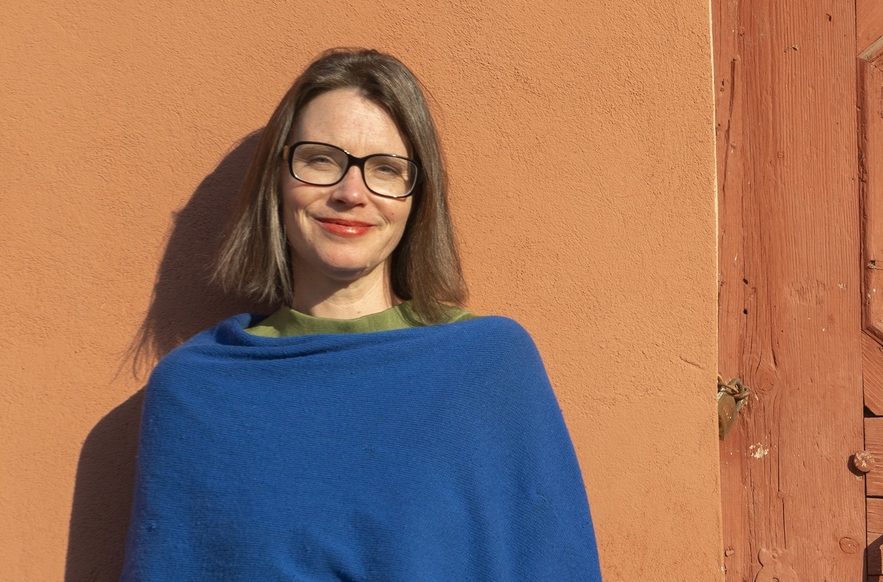
Julie Dawson is a postdoctoral-track fellow of the Austrian Academy of Sciences, based at the University of Vienna’s Institute for Contemporary History. Her dissertation examined Bukovina Jewish history and postwar Jewish life in Romania through the lens of a Transistrian survivor whose diaries she discovered in Romanian archives. She additionally holds degrees from Columbia and Northwestern University. Dawson has worked extensively in and with Romanian archival repositories, directing the Leo Baeck Institute’s archival survey of Transylvania and Bukovina ( jbat.lbi.org) from 2012-2019. She has held fellowships from the Vienna Wiesenthal Institute/Yale University (2020-2021) and the Fondation pour la Mémoire de la Shoah (2022-2024). She is co-editor of Precarious Archives, Precarious Voices: Expanding Jewish Narratives from the Margins (2023) Her research interests include Jewish Bukovina, communist Romania, Habsburg Jewish history, women’s history, trauma, and memory studies.
My project examines and contextualizes a recently found set of German-language diaries written in Romania during the early postwar period by Blanka Lebzelter, a survivor of the Transnistrian Holocaust. Works dedicated to German-Jewish life and history in the borders of present-day Romania are still few and almost none take a gendered and microhistorical approach, as my project does. By examining not only the diary contents, written from 1948 to 1961, but also Blanka’s life prior to the period covered, the work addresses details of every day Jewish life, Shoah atrocities, and survivor trauma as well as questions of identity and memory stretching from the Habsburg empire to present-day post-communist Romania.
My discoveries about Lebzelter’s familial network complicate our understanding of narratives of the pre- and postwar experience of German-speaking Jews. In particular, the work sheds light on the German-speaking Jews of rural Bukovina, about whom there is almost no scholarship, while also placing these circles in the context of the more well-known culturally Austrian Jewish milieu of urban Bukovina (Czernowitz). Working from the concept of diaries at the confluence of literature and history, my project employs interdisciplinary methods, grounded in biography, microhistorical approaches, and gender and women’s history, to analyze and contextualize Lebzelter’s writings and life, bringing to light not only the voice of one survivor long silenced, but through doing so, unearthing the emotional experience of survivors in postwar Romania.
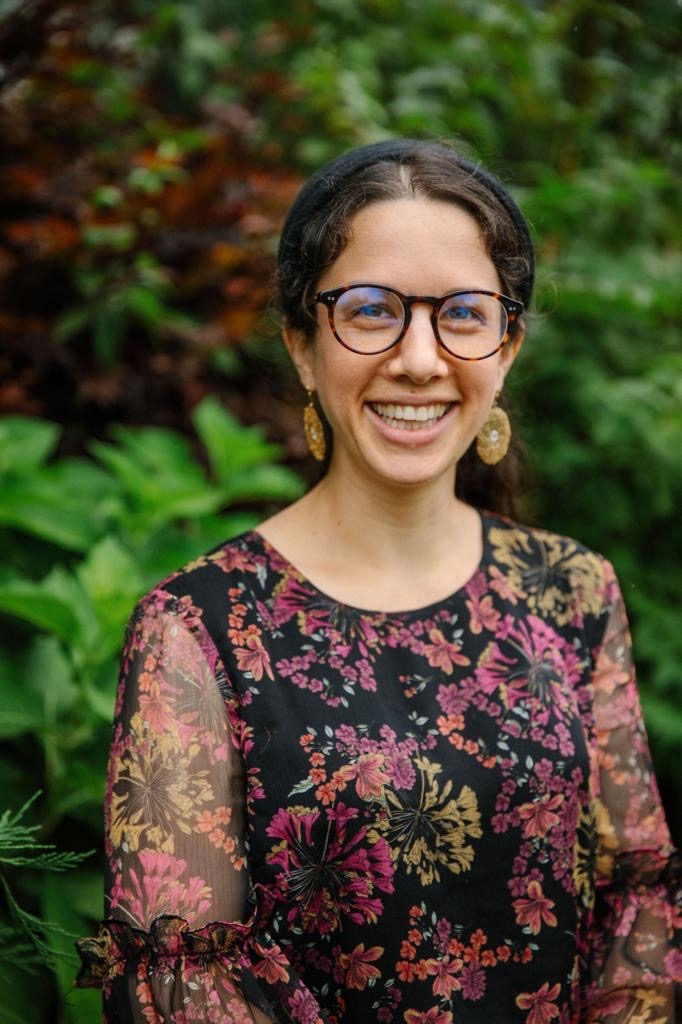
Shira Billet is Assistant Professor of Jewish Thought and Ethics at the Jewish Theological Seminary of America. She holds a PhD from the Department of Religion at Princeton University and was a postdoctoral associate in Jewish Studies and Philosophy at Yale University. In 2025-2026, she was a research fellow at the Program in Judaic Studies at Princeton University, and in 2027 she will be a Harry Starr visiting scholar in Jewish Philosophy at the Center for Jewish Studies at Harvard University. Her work on 19th- and 20th-century Jewish thought and philosophy situates thinkers and their ideas within historical, intellectual, political, and regional contexts, and also gives attention to their reception histories. She has published on Hermann Cohen, Joseph B. Soloveitchik, Shalom Spiegel, and Elijah Zvi Soloveitchik, and is currently completing a book on Hermann Cohen.
My book, The Philosopher as Witness: Hermann Cohen on Virtue and the History of Philosophy chronicles a crucial moment in the life of the Neo-Kantian philosopher Hermann Cohen, and traces its influence on his philosophy and Jewish thought. The book begins in the district courthouse in Marburg, Germany, in 1888, where Cohen was called to serve as an expert witness. 1880s Marburg, “the cradle of modern antisemitism,” was the seat of a popular political movement with an explicitly antisemitic platform. The trial focused on whether public statements at a rally – accusing the Talmud and Jews of being unethical – constituted libel. The court zeroed in on the question of the ethics of Judaism, which Cohen argued was a philosophical question. In his testimony, Cohen presented a philosophical method for rendering ethical judgments about historical sources such as the Talmud – a new application of the same method he had used to study the history of philosophy. Although Cohen emphasized the continuity between his testimony and his status as a philosopher, his role in the trial harmed his standing in the field. I argue in the book that the trial was a crucial moment in the development of Cohen’s thought. The experience of the trial led to a new interest in the role of the philosopher in history and a new understanding of how virtue shapes the pursuit of philosophy. Moreover, my recovery of the centrality of virtue in Cohen’s philosophy corrects two opposing misunderstandings of his life’s work: accusations of idealist abstraction, on the one hand, and claims that Cohen abandoned rationalism, on the other. Both positions misunderstand the critical function virtue plays in Cohen’s thought, supporting rational philosophical pursuit in the face of harsh existential and political realities.
Latest News