Heresy, Witch Hunts, and Political Persecution: The Problem of Speech from the Enlightenment to the Present
with Jason Stanley and Eliyahu Stern
- Tag/Uhrzeit
- –
- Ort
- Center for Jewish History (map)
15 W. 16th St.
New York, NY 10011 - Format
- Persönlich
- Eintritt
- Allgemein: Kostenlos
Presented by the Leo Baeck Institute as part of the LBI Forum on Free Speech and Democracy
Made possible in part by support from the Erna & Heinz Mayer Fund at the LBI
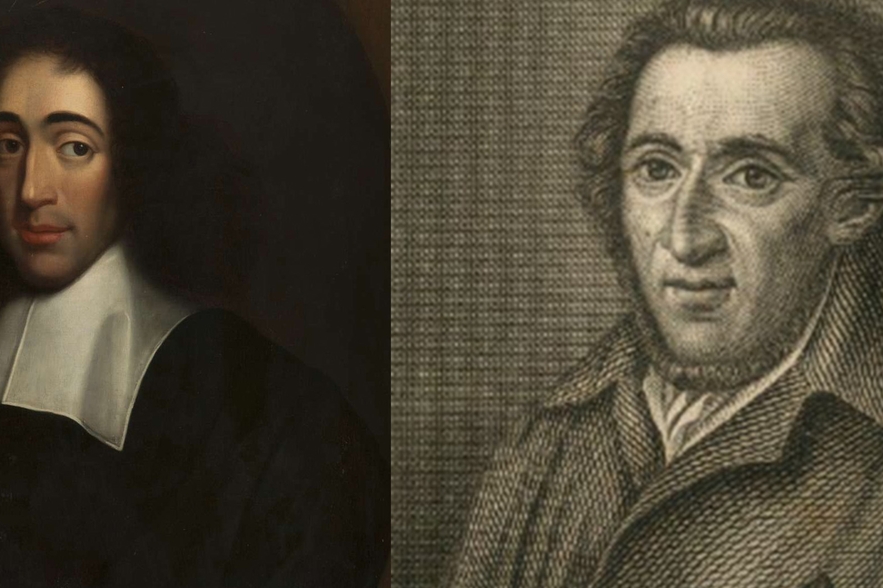
In 1783 the German philosopher Moses Mendelsohn published his monumental work Jerusalem – Or on Religious Power and Judaism where he laid out his blueprint for Jewish political and religious life. At the very center of Jerusalem was the idea that all human beings should be granted the ability to think and speak without religious coercion or censorship. To prove his point, Mendelsohn recuperated the legacy of the most infamous and detested heretic on the Continent, Barukh Spinoza, the so-called “atheist” and political “libertine.”
In this conversation, the philosopher Jason Stanley (Toronto) and the historian Eliyahu Stern (Yale) will discuss the relevance of Mendelssohn’s and Spinoza’s views on heresy and the freedom of speech to the threats facing American political life and Jewish communities and institutions today.
Leo Baeck Institute Forum on Free Speech and Democracy
Made possible in part by support from the Erna & Heinz Mayer Fund at the LBI
As the United States observes its semiquincentennial anniversary, one of its most cherished political values is also one of its most hotly debated. Is free speech still protected in America? If not, what poses the greater threat: state repression, a censorious culture, or a corporate media environment where free expression belongs to the highest bidder? In a world where hatred quickly metastasizes online – are the people even safe from free speech?
The ideas that found expression in the First Amendment and the constitutions of other liberal democracies were shaped and reshaped by Jewish thinkers from Spinoza to Arendt, enabled processes of Jewish emancipation and religious reform, and are still seen as undergirding religious freedom in pluralistic societies.
In this series, scholars, activists, and public intellectuals will explore these questions through the lens of German-Jewish history, starting with documents in the LBI collections and mining them for insight into the present.
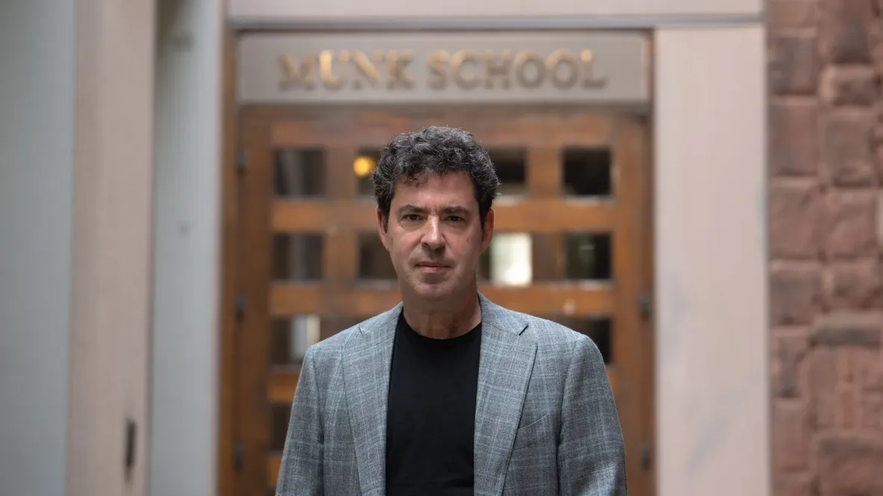
Jason Stanley is a philosopher and the Bissell-Heyd-Associates Chair in American Studies at the Munk School of Global Affairs & Public Policy at the University of Toronto. He is the author of seven books, including How Propaganda Works (2015), the New York Times-bestselling How Fascism Works (2018), and Erasing History: How Fascists Rewrite the Past to Control the Future (2024). His books have been translated into more than 25 languages.
Before moving to the Munk School in 2025, Stanley was the Jacob Urowsky Professor of Philosophy at Yale University (2013–2025). He has also taught at Rutgers University (2004–2013), the University of Michigan (2000-2004), and Cornell University (1995-2000).
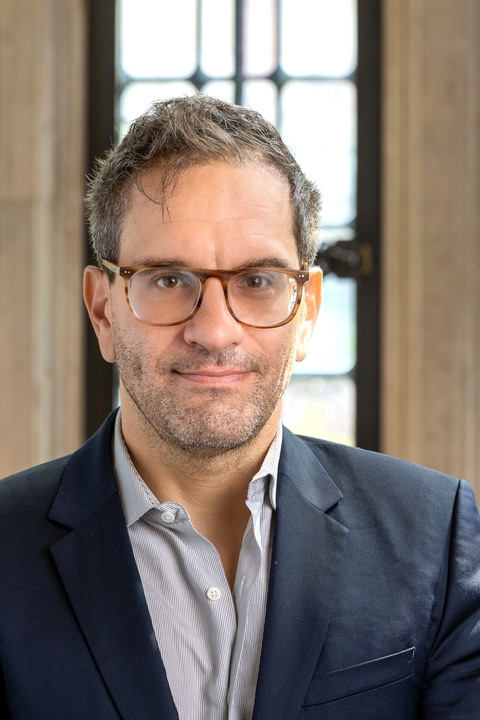
Eliyahu Stern is Professor of Modern Jewish Intellectual and Cultural History in the Departments of Religious Studies and History at Yale University. Previously, he was Junior William Golding Fellow in the Humanities at Brasenose College and the Oriental Institute, University of Oxford. He is the author of the award-winning, The Genius: Elijah of Vilna and the Making of Modern Judaism (2012). His second monograph Jewish Materialism: The Intellectual Revolution of the 1870s (2018) details the ideological background to Jews’ involvement in Zionism, Capitalism, and Communism. He has served as a term member on the Council on Foreign Relations and a consultant to the Museum of the History of Polish Jews in Warsaw, Poland. Currently, he is a member of the Academic Advisory Board of the Center of Jewish History.