Lene Schneider-Kainer, Olga Fisch, Anni Albers and Franziska Mayer in Latin America
- Tag/Uhrzeit
- –
- Format
- Online
- Eintritt
- Allgemein: Kostenlos
- Tickets
- Tickets bestellen
Woven in Exile:
Lene Schneider-Kainer, Olga Fisch, Anni Albers and Franziska Mayer in Latin America
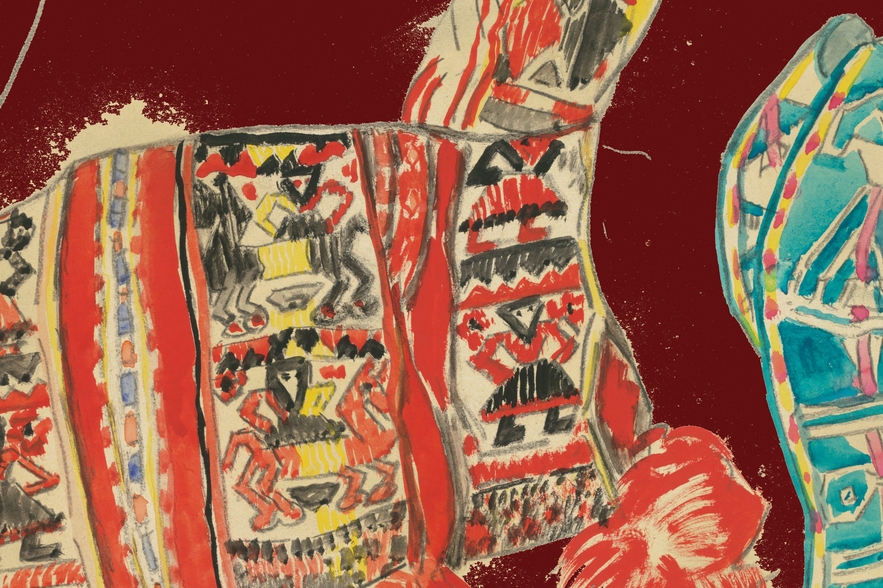
What happens when Jewish female artists fleeing Nazi Europe encounter the textile traditions of indigenous Latin America? This talk traces the intertwined careers of three women who, in exile, discovered a new artistic language.
Lene Schneider-Kainer, a Viennese painter, settled in Cochabamba, Bolivia, where she opened a textile workshop that combined indigenous weavers' knowledge with new designs. Her textiles, made from llama and alpaca wool, were soon exhibited internationally. Olga Fisch, born in Budapest, was exiled to Quito, Ecuador. Her fascination with local cultures led her to become a celebrated rug designer, drawing on her collection of archaeological and popular art. Anni Albers, who had studied at the Bauhaus and later taught weaving at Black Mountain College, drew on her travels through Mexico and the Americas—and on her early encounters with Andean textiles at Berlin's Ethnographic Museum—to reinvent her tapestry practice. Franziska Mayer, an exile from Germany, studied and taught in the U.S. before settling in Huancayo, Peru. Interested in diverse loom techniques, she founded a weaving workshop and a museum dedicated to traditional textiles in the Andean Highlands.
Together, their work reveals an overlooked chapter in twentieth-century art history. But their stories also raise a deeper question: how did the experience of exile as Jewish women—marked by discrimination, displacement, and reinvention—shape the way these artists came to see and value indigenous art forms that Western culture had long dismissed?
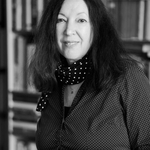
Sol Izquierdo de la Viña is an art historian specializing in transcultural dynamics in 20th-century German art. She is a Marie Skłodowska-Curie Global Postdoctoral Fellow at the Spanish National Research Council (CSIC) and a Visiting Scholar at New York University.
She earned a Ph.D. in Art History from the Complutense University of Madrid and an M.A. in Global Art History from the Free University of Berlin. She received the 2021 Best Ph.D. Prize in the Humanities from the Funcas Foundation. She has held curatorial roles at the Brücke Museum Berlin and SAVVY Contemporary. Her writings appear in academic journals and in books published by De Gruyter, Brill, and Bloomsbury Publishing.
This talk draws on her research for the postdoctoral project “Transcultural Weaving: Exiled Jewish Women Artists in the 20th-Century Americas,” supported by the Marie Skłodowska-Curie Actions of the European Commission.
Nächste Veranstaltungen
–

–
–
–
–

–
–

–
–
–